
Chapter 1
Chapter 1
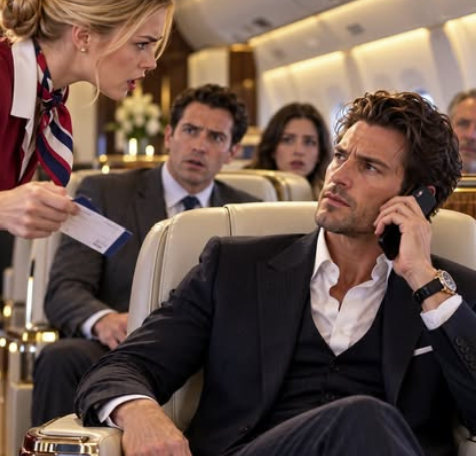
They Tried to Throw a Quiet Billionaire Out of First Class, Never Imagining He Controlled a $900 Million Aviation Deal. But When He Called the Airline's CEO, Seven Words Turned Their Arrogance Into Pure Panic. **Part 1** The entire First-Class cabin fell into an uncomfortable silence when the senior flight attendant stood over Marcus Carter in Seat 2A and demanded that he leave immediately. She held his boarding pass between two fingers, her expression suggesting she had already decided he didn't belong among the wealthy passengers. "Sir, I'm asking you one final time to give up this seat," she announced loudly enough for several nearby travelers to hear. Marcus looked up without raising his voice and asked, "Is there something wrong with my ticket?" **What nobody realized was that humiliating this quiet passenger could destroy a $900 million aviation agreement before the aircraft even left the gate.** Fifteen minutes earlier, Marcus had boarded without attracting attention, his ticket scanned and approved at the gate. He wore black jeans, ordinary sneakers, and a plain black T-shirt, carrying only a small leather bag. There was no luxury watch, expensive suit, or personal assistant suggesting that he controlled an international investment empire. At seventy-three, Marcus had learned that genuine influence rarely required an impressive appearance. **He had deliberately dressed simply because he wanted to discover how the airline treated customers who appeared to have no special status.** Marcus was the founder and CEO of Carter Meridian Group, a global investment powerhouse managing billions of dollars in transportation and infrastructure projects. After months of negotiations, his company was preparing to finalize a strategic aviation partnership worth an extraordinary $900 million. The airline's executives had promised exceptional service, rigorous employee training, and equal respect for every passenger. During countless meetings, Marcus had watched polished presentations celebrating the company's supposedly flawless customer experience. **But he believed one ordinary flight could reveal more about its true culture than a hundred impressive corporate slides.** "May I have my boarding pass back?" Marcus asked, extending his hand politely. The senior attendant refused, insisting that she had enough experience to recognize someone occupying the wrong cabin. Marcus reminded her that his ticket had been scanned successfully and clearly displayed First Class, Seat 2A. Instead of checking the reservation system, she replied dismissively, "I've worked these flights long enough to know when something isn't right." **Marcus realized the problem was no longer a possible seating mistake—it was her refusal to examine the facts.** Several passengers turned toward the confrontation, and a woman across the aisle quietly raised her phone to record. At that moment, the passenger assigned to Seat 2B returned from the lounge carrying an expensive leather briefcase. "What's happening here?" he asked impatiently, glancing toward Marcus. The attendant answered that she was dealing with someone who appeared to be sitting in the wrong cabin. The businessman sighed and said, "Could you remove him quickly? Some of us actually have important work to do." Marcus remained composed, although the public accusation was becoming increasingly humiliating. Only hours earlier, his own board members had urged him to approve the airline partnership immediately, convinced it would transform the company's future. Now he was watching airline employees disregard a valid ticket while treating another passenger's impatience as authority. His company's financial analysts had already completed the figures, and the final agreement was waiting for his signature after landing. **Yet no financial projection could excuse the arrogance unfolding directly in front of him.** The attendant stepped closer and warned Marcus that his luggage could be removed if he continued refusing to cooperate. Before he could answer, his phone vibrated inside his pocket with three messages from Daniel Price, the airline's chief executive. Daniel wanted to know whether Marcus was enjoying his flight and reminded him that the $900 million agreement was ready for final approval. Marcus read the messages carefully, then lifted his eyes toward the attendant. **Suddenly, he understood that the man anxiously awaiting his signature had no idea what was happening aboard his own aircraft.** "May I ask you something?" Marcus said, his voice remarkably steady. "What's the name of your chief executive officer?" The attendant laughed, clearly amused by the question, and replied, "Daniel Price. Why, are you planning to call him?" Several nearby passengers chuckled, but Marcus didn't smile. He opened Daniel's messages and calmly selected the number displayed on his screen. The passenger in Seat 2B leaned forward and suddenly recognized the executive's name on Marcus's phone. His amused expression disappeared as Marcus placed the call, while the attendant continued holding the boarding pass she had refused to return. The connection opened almost immediately, and a cheerful voice greeted Marcus personally from the other end. Every conversation nearby stopped as passengers realized this was not an ordinary customer-service call. **Then Marcus looked directly at the stunned attendant and said the seven words that could unravel the airline's biggest deal: "Daniel, we need to discuss our deal."** PART 2: For three seconds, nobody in First Class moved as Daniel Price's voice came through the phone. "Marcus? Is everything all right? We're expecting you to sign the agreement after you land." Marcus glanced at the attendant, who was suddenly looking less confident. "Daniel, I'm sitting in Seat 2A with a valid ticket, but your employee is trying to throw me off the aircraft without checking the reservation." Daniel's cheerful tone vanished instantly. "Which flight are you on? What's the attendant's name?" Marcus read the name printed on her uniform. She tried to interrupt, insisting there had been a misunderstanding, but Daniel had already heard enough to demand an explanation. The attendant finally handed Marcus his boarding pass, her fingers trembling slightly. "Sir, perhaps we can resolve this privately," she whispered. Marcus shook his head. "You had several opportunities to resolve this privately. You chose to humiliate me in front of everyone instead." The businessman in Seat 2B suddenly became fascinated with his briefcase. Moments earlier, he had demanded Marcus's removal, confident that his expensive clothes gave him the right to decide who belonged in First Class. Now he quietly asked, "Wait, are you actually Marcus Carter from Carter Meridian Group?" Marcus offered no answer, and the silence made the man's face turn pale. Daniel returned to the conversation, his voice sharp with concern. He explained that he was contacting the airline's operations director immediately and wanted the captain informed about the situation. Marcus stopped him before he could continue. "I don't want special treatment because of my position," he said. "I want to know whether your company respects people who cannot call you personally." Across the aisle, the woman recording the confrontation lowered her phone slightly, visibly surprised by Marcus's response. Other passengers began speaking up, confirming that they had watched the attendant dismiss his valid ticket without checking the system. The attendant attempted to defend herself, but every explanation sounded weaker than the last. Then Daniel asked the question nobody expected. "Marcus, are you telling me the agreement is in jeopardy?" Marcus looked through the window at the waiting ground crew and answered calmly, "I haven't signed it yet, Daniel. And now I have a very important reason to reconsider." The cabin fell silent again, but this time the attendant wasn't the only person who looked frightened. Somewhere on the ground, senior executives were about to learn why a single passenger's experience could threaten a deal worth $900 million. And Marcus had not yet revealed what he intended to do next. PART 3: Within minutes, the aircraft's cabin door opened, and two senior airline officials hurried aboard, followed by the regional operations director. The senior attendant stood rigidly beside Seat 2A, desperately trying to maintain her professional expression. Daniel Price remained on the phone, demanding that his team establish exactly what had happened before the aircraft departed. Marcus simply sat quietly, his boarding pass resting on the table in front of him. At seventy-three, he had learned that the truth rarely needed to shout to make itself heard. The regional director approached Marcus and introduced himself, apologizing for the confusion before asking whether he would be willing to explain the incident. Marcus described everything calmly, from the attendant refusing to return his ticket to the businessman demanding his removal. He emphasized that nobody had attempted to verify his reservation until he called Daniel personally. "That's the part you need to understand," Marcus explained. "What happens to someone without the CEO's private number?" The director lowered his eyes because he had no convincing answer. The attendant immediately insisted she had only been protecting the airline from possible fraud. Marcus listened without interrupting, then asked one simple question. "Did you check the reservation system before deciding my ticket was invalid?" She hesitated before admitting she had not. "Then what exactly were you protecting the airline from?" Marcus asked. Her silence answered more honestly than her excuses ever could. Meanwhile, the businessman in Seat 2B suddenly stood and offered Marcus an awkward apology. He claimed he had been stressed about an important meeting and had misunderstood the situation. Marcus looked at him thoughtfully before replying, "You didn't misunderstand anything. You decided my appearance told you everything you needed to know about me." The businessman slowly sat back down, unable to meet the eyes of the passengers who had witnessed his behavior. Daniel Price finally arrived at the aircraft after leaving the airport's executive lounge. He walked directly toward Marcus, looking genuinely troubled rather than merely concerned about the contract. "Marcus, I am personally sorry," he said, extending his hand. Marcus shook it but did not smile. "Daniel, your presentations promised a culture of respect, accountability, and excellent service. Today, I discovered what those promises look like when nobody thinks the customer has power." Daniel asked whether they could continue their discussion privately in the executive lounge. Marcus agreed, but before leaving, he turned toward the regional director. He requested that the airline preserve the cabin footage, document the incident, and investigate whether similar complaints had been ignored. He also insisted that the attendant receive a fair investigation rather than an immediate punishment designed to impress him. "Accountability isn't revenge," Marcus explained. "It's making sure the same mistake doesn't happen to someone else tomorrow." In the lounge, Daniel opened the partnership documents on his laptop, hoping they could still finalize the $900 million agreement that afternoon. Marcus studied the papers for several minutes before closing the folder without signing. Daniel's shoulders dropped as he asked whether the entire partnership was now lost. Marcus shook his head. "I haven't decided that yet," he answered. "But your company must prove that its values exist beyond its advertising campaigns." Then Marcus revealed something Daniel had never expected. His investment team had already included customer-treatment standards in the proposed agreement, with independent audits and measurable service requirements. If the airline failed to meet those standards, Carter Meridian Group could delay future funding until corrective measures were completed. Daniel stared at the document, realizing that the incident had exposed precisely the kind of corporate weakness those provisions were designed to prevent. Marcus stood, picked up his small leather bag, and offered Daniel one final opportunity. He would consider signing the agreement if the airline conducted a transparent investigation, corrected its employee training failures, and established a system that protected every passenger's dignity. Daniel immediately agreed to begin the process, but Marcus wasn't finished. Before leaving, he placed one additional document on the table. Daniel read the heading, and the color drained from his face. It wasn't another contract clause—it was a report documenting complaints the airline's executives had allegedly overlooked for months.