
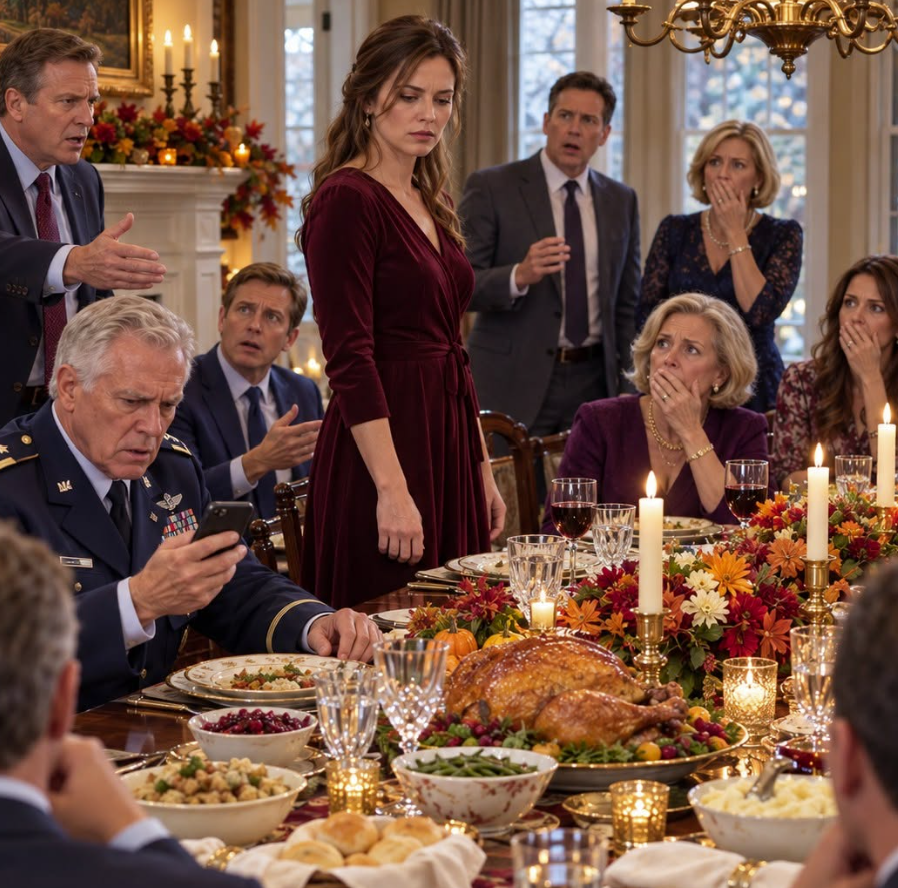
Chapter 2
That part, at least, was reasonable.
He continued.
“You build intelligence. You establish patterns. You identify vulnerabilities. Then you choose the moment.”
Jason nodded.
“Exactly.”
I looked at him.
Exactly?
Jason sold commercial real estate.
But Thanksgiving has always been a magical holiday where men become experts on warfare between bites of stuffing.
Uncle Frank continued describing how he believed a hypothetical operation should be structured.
I listened.
Some of his principles were sound.
Some were twenty years out of date.
And one assumption about surveillance capability was so incorrect that I instinctively said:
“That wouldn’t be the primary constraint.”
The table went quiet.
Frank looked at me.
“What?”
I immediately regretted speaking.
Not because I was wrong.
Because I knew what was coming.
“The constraint wouldn’t necessarily be surveillance,” I said carefully. “Depending on the environment, access and attribution could be more significant.”
Tyler frowned.
“But if you have drones—”
“It’s more complicated than having drones.”
Frank smiled.
That smile.
The patient one.
“Tanya.”
I reached for my water.
“Yes?”
“You’re thinking analytically.”
“I usually do.”
A few people chuckled.
Frank didn’t.
“That’s useful in an office. But operations don’t work like reports.”
I said nothing.
“On the ground,” he continued, “you have human factors. Command relationships. Terrain. Logistics. Political restrictions. Intelligence gaps.”
“Yes.”
“So you can’t reduce it to something you read in a briefing.”
“I agree.”
He seemed almost disappointed that I wasn’t fighting him.
Tyler jumped in.
“So what would matter most?”
Frank turned toward him.
“First, you’d need to understand the operational environment.”
I made the mistake of glancing at him.
He caught it.
“What?”
“Nothing.”
“No, come on.”
Mom gave me a warning look.
Please don’t start something.
I wasn’t going to.
But Frank kept going.
“You disagree?”
“I think we’re discussing a hypothetical situation without enough information to make a meaningful assessment.”
He laughed.
“Sweetheart, that’s exactly how analysts talk.”
I put down my fork.
“And how should they talk?”
“Sometimes you have to stop hiding behind uncertainty and make a decision.”
Something inside me almost smiled.
If only he knew.
Instead, I said, “Sometimes uncertainty is the most important part of the decision.”
Frank leaned back.
Then came the sentence.
The one everyone remembered later.
“Sweetheart, we’re talking about real operations. You wouldn’t understand the complexity.”
He gestured toward Jason and Tyler.
“Leave it to us men.”
Silence.
Not shocked silence.
Familiar silence.