
Chapter 2
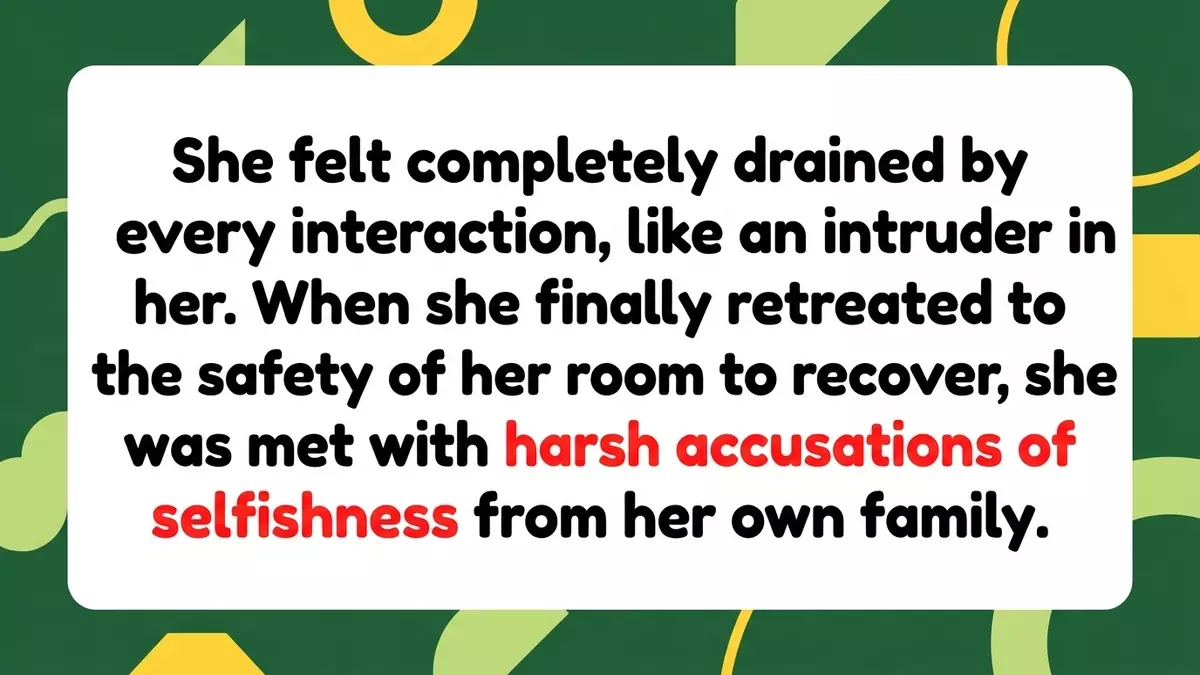
The psychology of introversion suggests that her brain is fundamentally wired to process external stimuli deeply. Therefore, her extended retreats into absolute solitude are not an act of hostility; they are a biological necessity for emotional regulation and nervous system recovery.
Shifting the Household Narrative: From "Rude" to "Recovery"
Navigating the delicate balance between rigid family expectations and personal mental health boundaries is a daunting challenge. However, managing social burnout within a shared home requires removing the guilt associated with needing space. Experts suggest utilizing specific behavioral strategies to bridge the gap between neurodivergent needs and family harmony:
The Decompression Buffer
Instead of forcing immediate pleasantries or masking happiness the second she returns home, the teenager can establish a strict, pre-agreed "decompression buffer." This allows her a set window of undisturbed time to reset her nervous system before interacting with family.
By communicating this boundary clearly during a calm moment, the family can begin to shift their perspective. Instead of viewing her isolation as a personal slight or a sign of disrespect, they can learn to recognize it as a standard recovery mode.
Turning to Tech: Alternative Lifestyles for Introverts
When this raw confession surfaced online, the internet community came in hot. Commenters on platforms like Reddit were nearly unanimous in their empathy for the teenager, with many urging her to prioritize her mental health over family guilt.
Interestingly, several users pointed out that the modern digital landscape offers incredible alternative lifestyles for people who thrive in solitude. Finding the right remote job or utilizing specialized mobile apps can completely transform an introvert's relationship with society. By building a career centered on remote work, independent consulting, or digital creation, individuals with severe social exhaustion can successfully carve out a life that protects their peace without the pressure of traditional, face-to-face workspaces.
Conclusion: Accommodating Neurodivergent Needs at Home
This teenager’s quiet struggle highlights how difficult it can be to navigate a world explicitly built for extroverts. While her family currently views her isolation as selfish, her reality is one of sheer survival against constant sensory overload. True family support means recognizing that absolute solitude is sometimes a medical and emotional necessity, and learning to accommodate neurodivergent needs within our own households is the ultimate key to peace.
Frequently Asked Questions (FAQs)
1. What is the difference between being an introvert and experiencing introvert burnout?
Being an introvert simply means you recharge your energy by spending time alone. Introvert burnout, however, is a state of physical and emotional exhaustion caused by prolonged social interaction without a break. Symptoms include extreme irritability, physical fatigue, anxiety, and an absolute inability to handle further conversation.