
Chapter 3
A Warning for the Big Day: Several commentators even warned the bride to keep a close eye on her actual wedding day timeline. They strongly hinted that if the mother's chronic lateness wasn't addressed now, it would likely strike again when the wedding vows are actively being read at the altar.
Conclusion
Ultimately, major life milestones like these require mutual respect, punctuality, and accountability from everyone involved. While it is understandable that the mother felt a deep sting of sadness for missing the initial dress reveal, transforming that self-inflicted disappointment into an accusation of exclusion was incredibly unfair to the bride. To move forward, the bride deserves to enjoy her remaining wedding preparations without carrying the weight of unearned family guilt. A calm, direct conversation establishing clear timeline expectations for the wedding day is the only way to prevent a repeat performance.
Frequently Asked Questions
1. Was the bride selfish for starting the dress fitting without her mother?
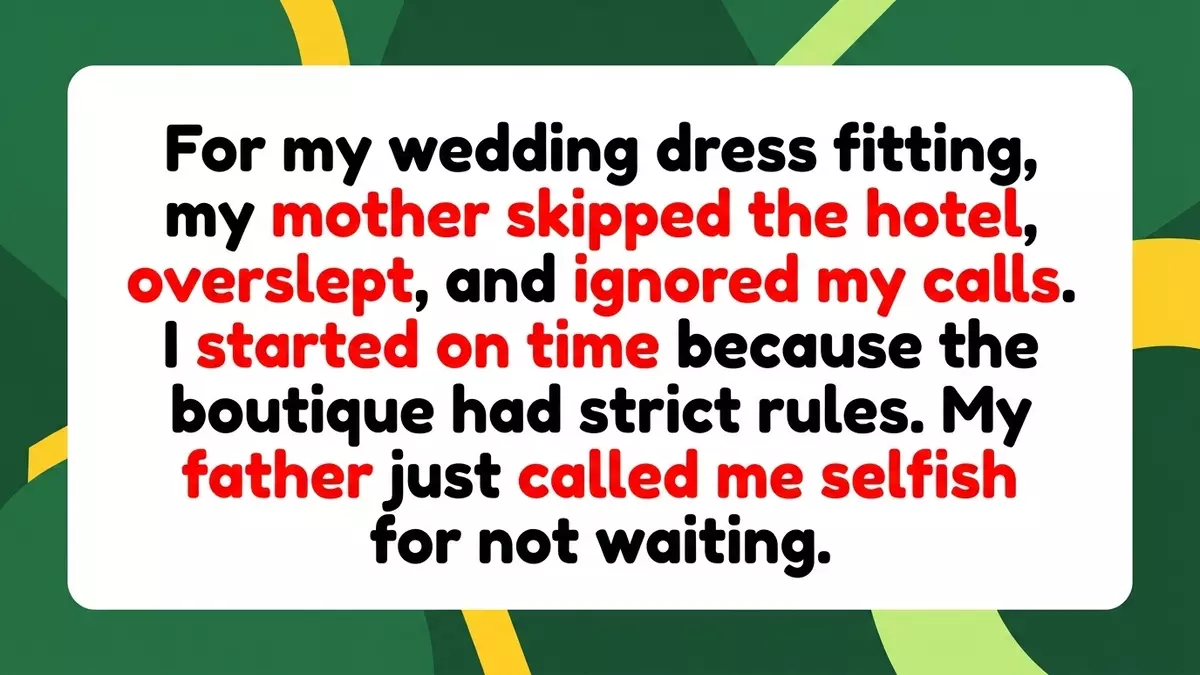
No. The bride was respecting the strict, pre-booked schedule of the bridal boutique and the time of her bridesmaids. Since the mother skipped the hotel prep night, overslept, and ignored phone calls, the bride made a logical choice to keep her appointment rather than risk losing her slot entirely less than a month before the wedding.
2. Why did the father blame the bride instead of his late wife?
This is a common behavioral mechanism known as family triangulation. The father stepped in to shield his stressed-out wife from the consequences of her own actions. By blaming the bride, he attempted to diffuse his wife's immediate anger and guilt, forcing the daughter to absorb the emotional penalty to keep the family peace.
3. How can a bride handle a chronically late parent on the actual wedding day?
To prevent wedding day delays, provide chronically late family members with a padded timeline. For example, tell them their presence is required for photos or transportation a full hour or two before the actual required time. Additionally, assign a trusted coordinator or bridesmaid to keep them on schedule.
4. What is the best way to handle emotional deflection from a parent?
When a parent deflects blame, stay anchored in the facts of the situation and refuse to engage with the emotional projection. Calmly repeat what occurred without matching their defensive energy. You can say: "I love you and wanted you there, but I had to start the appointment on time to respect the boutique's strict schedule."