
Chapter 2
The Showdown: Choosing Suffering Over Admitting Defeat
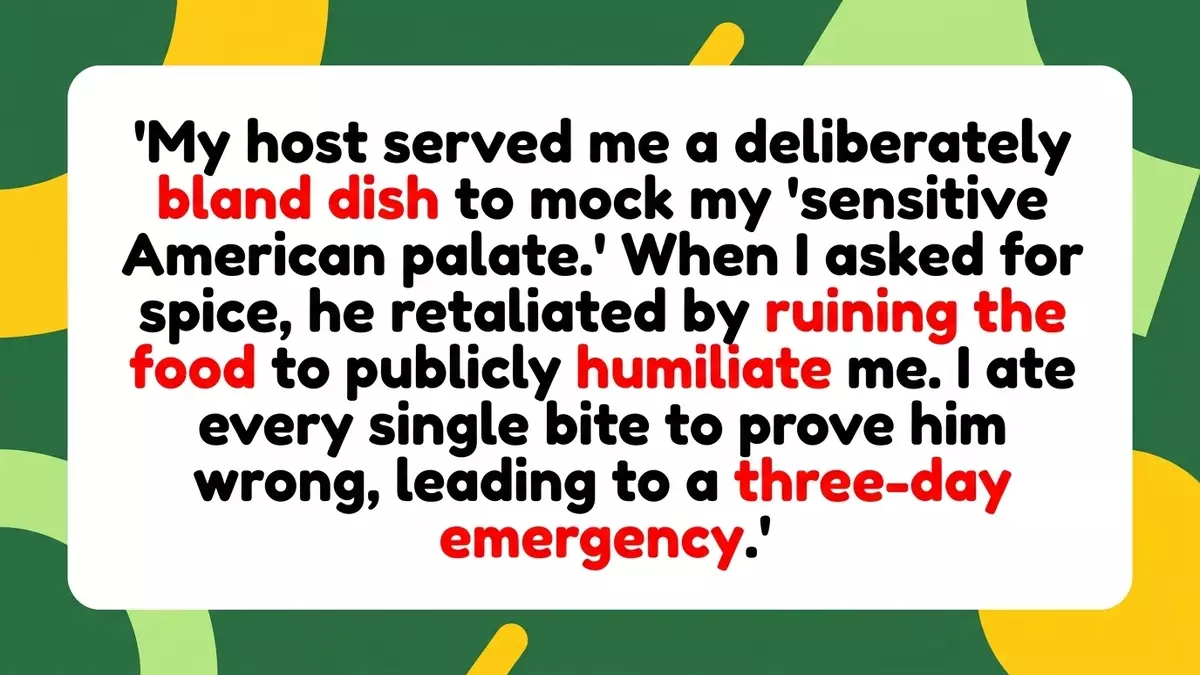
We’ve all been there—choosing intense physical suffering over the indignity of admitting defeat to someone we dislike. Instead of backing down, the guest decided to push through the pain, turning a simple meal into a grueling test of sheer willpower.
OOP (the original poster) walked directly into the trap. Once he realized the dish had been deliberately sabotaged, he had several options available:
-
His boyfriend noticed the hostility and offered to swap plates immediately.
-
He could have politely refused the meal after the first burning bite.
-
He could have laughed off the absurdity and pointed out what the father had done.
Instead, he chose a toxic contest of wills. The fundamental problem with that strategy is that winning required actively harming himself. He proved the father wrong by emptying the entire bowl, but the prize was three days confined to a Moroccan bed, possible respiratory complications from the heat, and a completely ruined vacation.
A Partner's Frustration: The boyfriend’s intense anger afterward makes complete sense. He was forced to spend his holiday acting as a caregiver for a fully grown man who knowingly ignored repeated warnings just to protect his masculine pride.
The Psychological Reality: Reactive Feuds and Lost Pride
The deeper issue at play isn’t really the food; it’s unyielding pride. Renowned family therapist Murray Bowen argued that family conflicts consistently escalate when individuals become emotionally reactive rather than staying securely grounded in their own personal boundaries.
That is exactly what happened at this dinner table. The father desperately wanted a negative reaction to prove his low opinion of the guest, and OOP gave him exactly what he wanted. Instead of exposing the father’s cruel behavior to the rest of the family, the guest turned the situation into a battle of stubbornness that everyone ultimately lost.
The healthiest outcome was actually the raw honesty that occurred after the dust settled. OOP acknowledged that his stubborn response was incredibly foolish, the boyfriend acknowledged that his father behaves terribly, and the father-in-law eventually admitted the food was intentionally sabotaged. Nobody emerged from the kitchen looking mature, but at least the truth became clear.
Conclusion: Refusing to Play the Game
Navigating deeply hostile in-law relationships is always a high-stakes balancing act, but fighting petty, malicious fire with literal stomach-burning spice rarely yields a true victor. If there is a lesson to be learned here, it is that you do not defeat a petty person by out-pettying them. Sometimes the strongest, most dignified response is simply refusing to play the game at all.