
Chapter 6
"There is no cure, Clayton," Ward said. "You should have listened to the dog."
By the fifth day, the Double-C ranch was entirely deserted by its daylight friends.
The word had spread from the bunkhouses to the saloons like prairie fire running before an autumn gale. Men who had worked Clayton’s line camps packed their bedrolls and saddles onto their pack mules and rode south toward Texas without waiting for back wages. They had seen Vance die that morning—his fingernails turning black, his breath coming in short, agonizing hitches until his heart simply stopped in the middle of a scream.
Hallowell, the youngest of the four riders, had died at noon, his mother weeping hysterically beside his cot while the neighborhood women stood at the gate, refusing to enter the yard. MacIntyre and Giles were blind and speechless by twilight, their systems shutting down in the exact sequence the ancient Cornish texts had documented three centuries before.
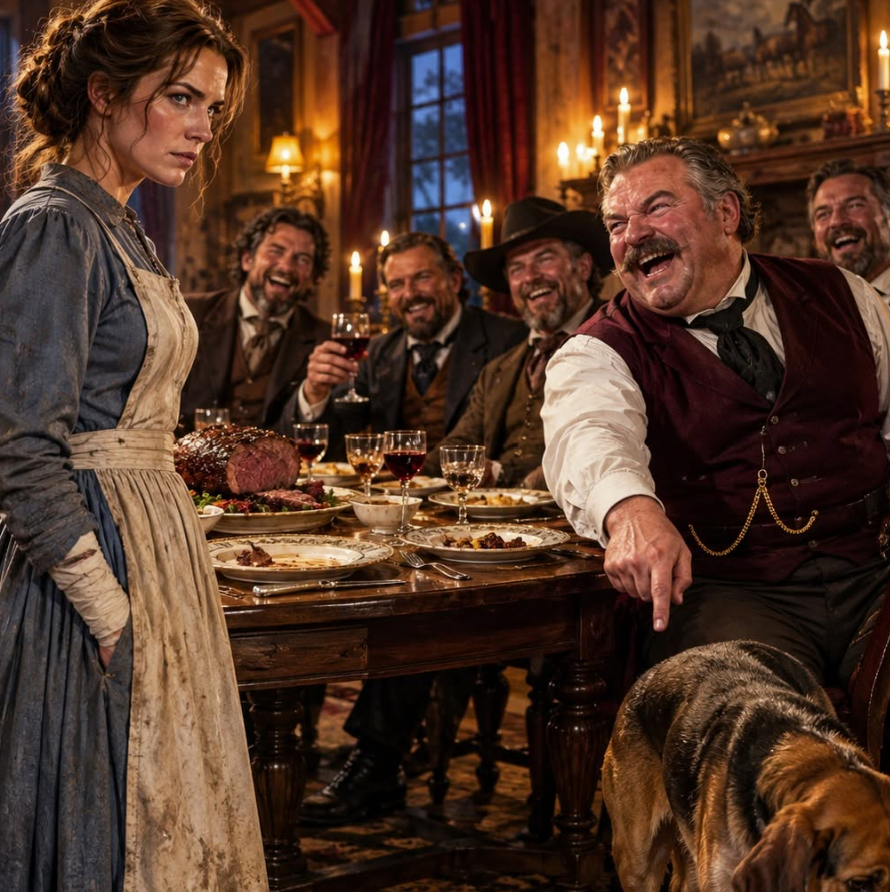
The county judge, who had laughed so heartily at Clayton’s dinner table when the meat was thrown to the floor, rode out to Kate Hayes’s homestead on Saturday morning.
He did not ride with an escort of deputies. He came alone, wearing his black broadcloth coat and carrying a legal satchel across his pommel.
The sun was bright and cold, casting long, sharp shadows across the dry bunchgrass. The willow creek ran clear and low over the river stones.
When the judge pulled his gelding up near the hitching rail, he found Kate standing outside her stone barn.
Her right hand was still bundled in clean white muslin, tucked into the waistband of her canvas apron. Her left hand held a broad-bladed pitchfork, with which she was turning clean golden straw into the horse stalls. She looked calm. Her brown hair was pinned neatly behind her ears, her skin clear, her gray eyes as steady and untroubled as the morning sky.
The judge dismounted stiffly, his hat in his hand. He looked at her hand, then at the sturdy, modest stone cabin her father had built with his own sweat.
"Miss Hayes," the judge said, his voice hesitant, stripped of every ounce of the courtroom bluster he had used to cow territorial juries.
"Judge Miller," Kate replied, setting the fork against the cedar timbers. "It’s a cold morning for a long ride."
"Yes," the judge said, clearing his throat. "It is."
He walked toward her, stopping three paces away. He looked toward the northern ridge, where the dust of Clayton’s five thousand steers could usually be seen moving toward the water tanks. Today, the ridge was silent. The cattle had begun to drift toward the creek bottom, unherded and untended.