
Chapter 1
Mom Refuses to Force Daughters to Play With Aggressive Child, Sparking Debate
We all look forward to those rare, peaceful afternoons where we can let our daily worries fade away. For one mother, a long-awaited trip to the local park with her young daughters was meant to be exactly that—a stress-free escape. After enduring weeks of overwhelming anxiety while her newborn was cared for in the Neonatal Intensive Care Unit (NICU), she was finally able to enjoy a sunny day outdoors with her sister-in-law and their girls.
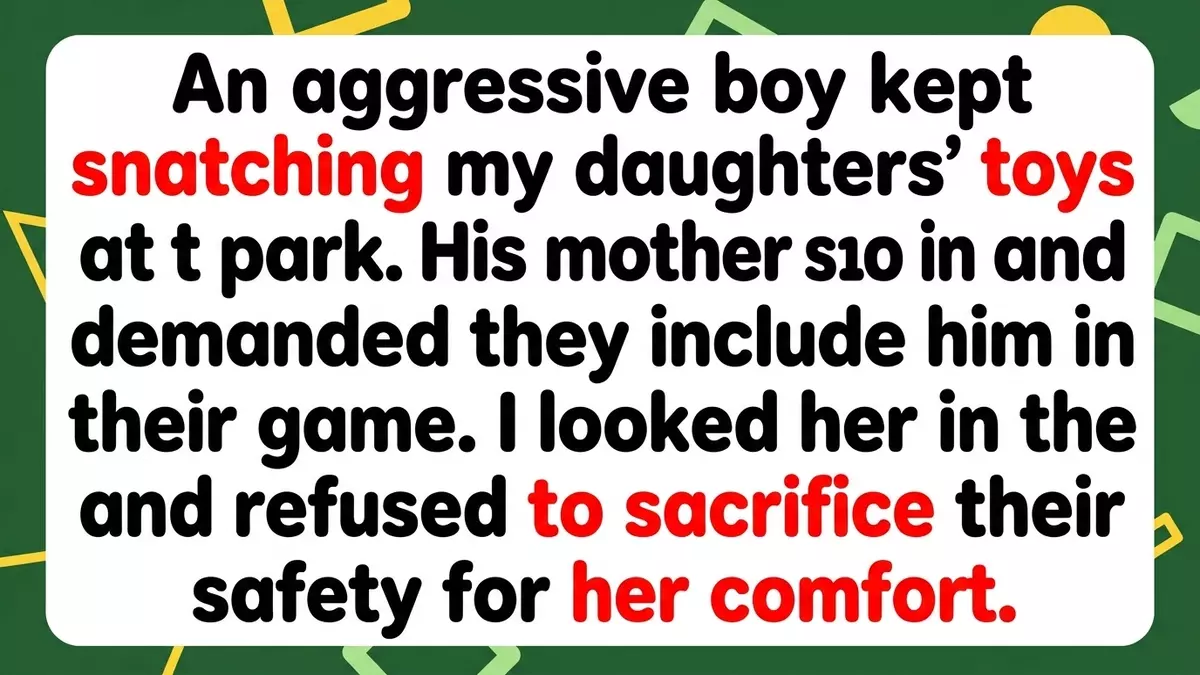
What began as a relaxing, restorative family outing quickly dissolved into a high-stakes lesson in setting personal boundaries. The peaceful atmosphere shifted when a young boy began shadowing the girls, disrupting their games, and aggressively snatching their toys. When the boy’s mother stepped in to demand that the girls include him, a simple playground interaction rapidly escalated into a full-blown confrontation between parenting styles.

Mom Refuses to Force Daughters to Play With Aggressive Child, Sparking Debate
The Playground Dilemma: Forced Inclusion vs. Safety
This scenario highlights a highly relatable pattern of forced socialization in public spaces. Often, parents of children struggling with social or behavioral boundaries expect nearby peers to accommodate rough play under the umbrella of "inclusion."
While teaching children to be welcoming is a positive goal, childhood development experts agree that forcing children to play together against their will can breed resentment rather than genuine connection.
Why Forcing Interaction Backfires
According to child psychologist Dr. Eileen Kennedy-Moore, children possess an inherent right to choose their own playmates, and forced interactions frequently produce negative results. This boundary development is especially critical for young girls, who are often culturally conditioned to prioritize the feelings and comfort of others over their own physical and emotional safety.
Teaching young girls that they must tolerate aggressive behavior or yield their personal boundaries just to keep the peace can hinder their ability to establish firm, healthy boundaries later in life.
Supporting Neurodivergent Development Productively
For parents of neurodivergent children, navigating public spaces is often incredibly isolating and exhausting. However, expecting untrained, unfamiliar peers to manage or absorb challenging behaviors is unrealistic and unfair to both parties.
Leading advocacy organizations, such as Autism Speaks, suggest that structured, small-scale, and supervised playdates are far more effective for building social skills than chaotic, open-ended playground encounters. Rather than demanding forced inclusion from strangers, a structured environment allows a child to learn positive social cues safely.