
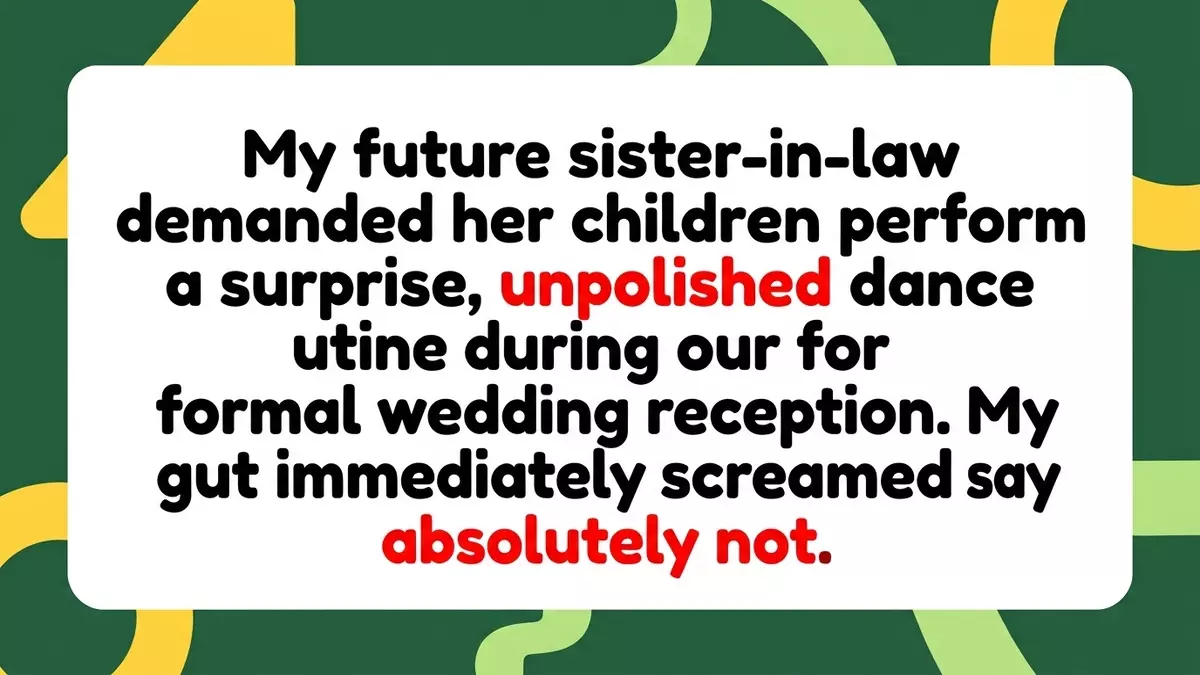
Chapter 2
Furthermore, when a partner has been conditioned to act as a people-pleaser for their family, breaking that cycle can feel incredibly uncomfortable. The groom’s history of being an on-call babysitter shows how easily family members can exploit a lack of limits. Fostering healthy boundaries requires consistent reinforcement, especially when transition periods trigger resistance from relatives who are used to getting their way.
How to Establish a Polite but Unyielding Refusal
To handle this smoothly and prevent a family dispute from hijacking the reception timeline, the couple can deploy specific structural communication strategies:
| Action Item | Implementation Strategy | Intended Behavioral Outcome |
| Deliver a Concise Script | The groom states: "That doesn’t fit our schedule, but we’re excited to celebrate with you." | Keeps the focus on logistics and prevents further emotional debate. |
| Brief the Vendors | Instruct the DJ, coordinator, and emcee in advance that no unscheduled mic or music requests are permitted. | Safeguards the physical timeline of the reception from a "surprise" performance. |
| Align Internal Loyalties | Affirm that protecting the partner's emotional peace takes precedence over pleasing extended relatives. | Establishes the new core family unit as the primary priority moving forward. |
Navigating the complex waters of extended family expectations while planning a wedding is one of the ultimate tests of a couple’s unity. When historical patterns of manipulation and entitlement are at play, every small request can feel like a major threat to a couple’s peace. Ultimately, protecting your partner’s emotional well-being and establishing a strong, united front is the foundation of a healthy marriage. It is about setting the tone for how your new family unit will interact with the world around it.
Conclusion: Protecting Your Peace Is Not Selfish
Most online readers sided firmly with the bride, with many labeling the sister-in-law's request as a bizarre bid for attention. A few commenters even warned the couple to prepare for a "surprise" performance anyway, suggesting they brief their DJ beforehand to avoid an awkward ambush on the dance floor.
Ultimately, weddings are highly personal milestones, and balancing family expectations with personal boundaries is a universal challenge. While some families thrive on spontaneous performances and child-centric moments, others prefer a more structured, adult-focused atmosphere. Protecting your peace on your special day is not selfish—it is a vital step in establishing your new life together as a team.
Frequently Asked Questions
Is it rude to decline a family member's request to perform at a wedding?
No. The wedding itinerary belongs entirely to the couple getting married. Declining an unscheduled or unpolished performance that does not fit your creative vision or timeline is a completely reasonable boundary to set.