
Chapter 3
[ Step 1: Document Transparencies ] ──► Share official, written rental policies directly to remove personal bias.
                │
                ▼
[ Step 2: Establish Direct Refusal ] ──► Firmly state your intention to proceed with your hard-earned vacation.
                │
                ▼
[ Step 3: Offer Cooperative Action ] ──► Help search for replacement travelers to actively salvage their funds.
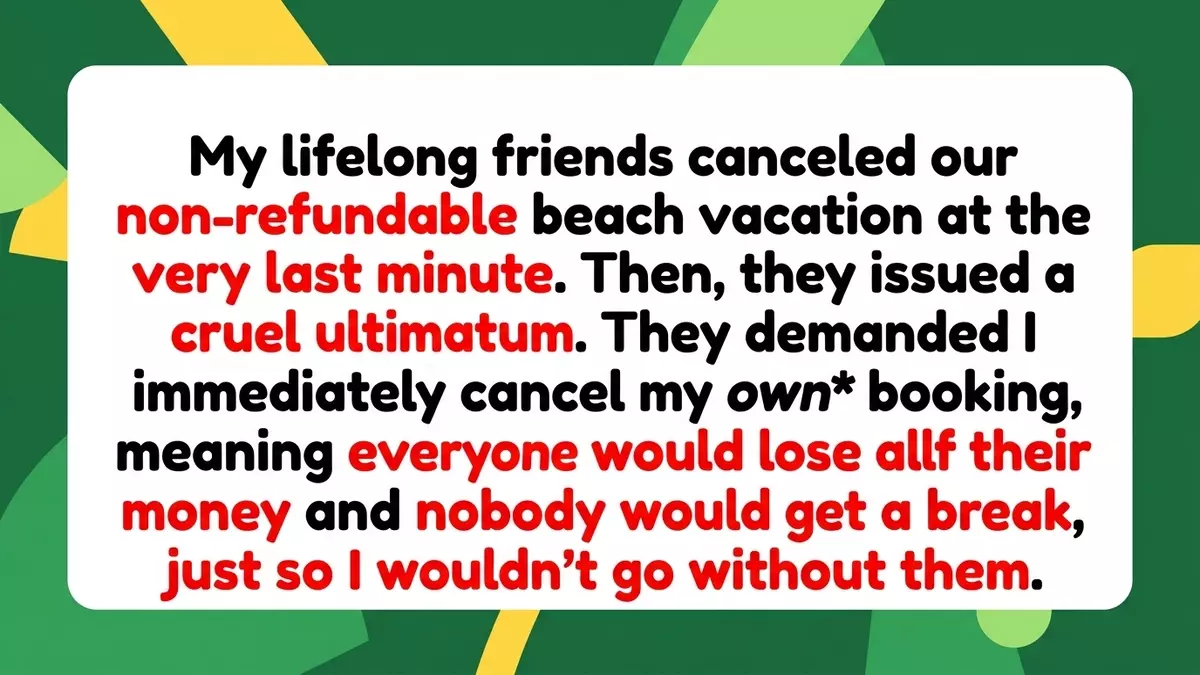
If you find yourself trapped in a similar social conflict, relationship experts suggest utilizing a structured, professional communication framework to preserve the relationship without compromising your boundaries:
1. Shift the Blame to Corporate Policy
Do not engage in an emotional debate about whether you "deserve" the trip. Instead, copy and paste the official cancellation text directly from the rental agency or property manager and share it with the group in writing. By keeping the communication centered on the rigid rules of the hospitality company, you effectively remove personal bias from the equation. The rental policy becomes the unyielding barrier, not your personal choices.
2. State Your Intention with Absolute Clarity
Deliver your final decision calmly without over-explaining or apologizing for taking your earned time off. You can use direct, neutral phrasing: "I am deeply sorry that your circumstances have changed and that you won't be able to join me. However, because our bookings are entirely non-refundable, canceling the reservation will not bring your money back. I am going to proceed with the trip as scheduled so that my personal investment and vacation time do not go to waste."
3. Offer Constructive, Cooperative Support
Demonstrate that you still value their financial well-being by proactively looking for a solution that helps everyone. Offer to actively advertise the two vacant bedrooms to mutual friends, coworkers, or family members who might be willing to buy out the departing shares at a discounted rate. This cooperative action proves you are operating as a supportive team player, while keeping the structural responsibility of the empty slots exactly where it belongs.
Managing the Isolation of a Giant Vacation Space
Proceeding with a vacation alone inside a sprawling, three-bedroom luxury condominium can trigger an unexpected wave of situational guilt. Walking past empty bedrooms or sitting at a large, quiet dining table can serve as a persistent reminder of the broken social circle back home.
| Single Traveler Strategy | Actionable Execution | Psychological Goal |
| Space Re-Purposing | Close the doors to empty bedrooms entirely | Removes visual cues of isolation and group abandonment |
| Itinerary Modification | Pivot from group activities to solo indulgence | Maximizes personal pampering, reading, and deep recovery |
| Social Environment Shifts | Spend days out in public beach zones or local cafes | Surrounds the traveler with community energy to combat silence |
To protect your mental health during the getaway, you must actively reframe the environment. View the extra square footage not as an empty monument to a fight, but as an absolute luxury of space. Close the doors to the unused rooms to eliminate the visual reminder of your friends' absence, and fully throw yourself into a solo itinerary dedicated to deep rest, processing, and personal restoration.