
Chapter 1
Breaking the Chains of Parentification: 20-Year-Old Moves Abroad to Escape Forced Caretaking
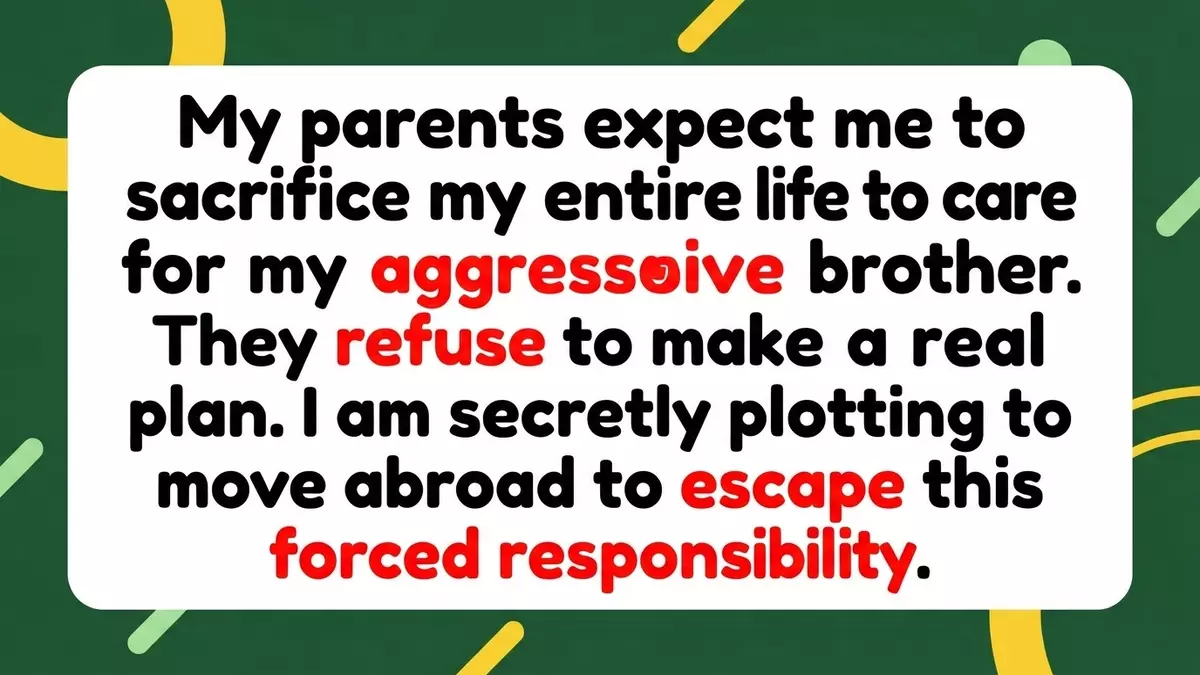
We all know that moment when family expectations transition from a supportive safety net into an entirely suffocating weight. For one 20-year-old sister, the terrifying prospect of being forced into the role of a lifelong, full-time caretaker for her severely autistic younger brother has pushed her to an absolute psychological breaking point.
Living in a household with zero future planning, she faces daily physical aggression and a mounting pressure from her parents to inherit a lifetime of forced responsibility. Left to grapple with overwhelming guilt, her desperate urge to flee the country entirely has grown from a distant dream into an immediate strategy for self-preservation.

Breaking the Chains of Parentification 20-Year-Old Moves Abroad to Escape Forced Caretaking
The Exhausting Reality of Forced Parentification
The daily reality of profound developmental disability paints a stark, exhausting picture of a household running entirely on fumes. For this young woman, the domestic environment is defined by a ten-year-old sibling whose severe needs require constant management and whose emotional meltdowns routinely manifest as physical violence against her.
[Parental Denial & Lack of Long-Term Care Planning]
                       │
                       ▼
    [Forced Parentification of Eldest Sibling]
                       │
                       ▼
 [Physical Aggression, Deep Resentment & Fleeing Abroad]
Compounding the physical danger is a severe lack of structured preparation:
-
Parental Denial: The parents remain blissfully in denial about the true severity of their son's condition, choosing to ignore the reality that he will require high-level supervision long after they are gone.
-
Absence of a Safety Net: The household has established no specialized trusts, formal legal arrangements, or professional safety nets.
-
The Default Plan: In the absence of an institutional transition strategy, families often default to the nearest female relative, completely sacrificing her autonomy, mental health, and future financial independence to act as an unpaid, lifelong guardian.
This dynamic illustrates a quiet epidemic known among mental health professionals as forced parentification—where a child or young adult sibling is inappropriately pressured to absorb parental caregiving duties due to systemic or familial failures.
The Systemic Failures of Special Needs Planning
When parents fail to proactively research residential placements, register with social services, or establish a special needs trust, they actively compromise the neurotypical sibling's freedom.
What is a Special Needs Trust?
A special needs trust is a legal and financial arrangement that allows a disabled individual to receive financial support for care, housing, and therapies without jeopardizing their eligibility for essential government benefits, such as Medicaid or Supplemental Security Income (SSI).