
Chapter 2
Failing to establish these legal boundaries early transforms a difficult sibling dynamic into a ticking time bomb of deep resentment. Experts stress that families with high-needs individuals must engage with dedicated social workers and estate planners to secure professional residential facilities or long-term state assistance before an age-related crisis occurs. Expecting an older sibling to serve as an uncompensated, permanent retirement plan is not a viable strategy; it is a fundamental breakdown of parental responsibility.
Reclaiming Autonomy: Legal and Emotional Self-Preservation
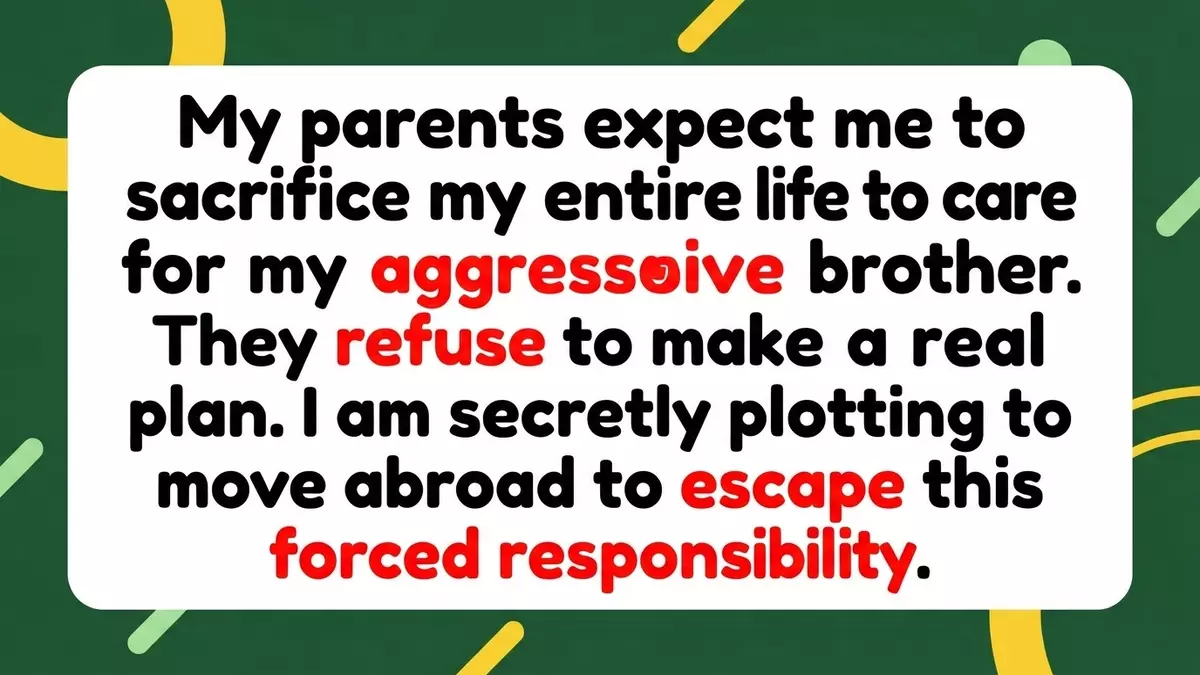
Navigating the delicate line between sibling compassion and personal survival is an incredibly heavy burden. For siblings who find themselves trapped in an environment of inherited responsibility and physical harm, stepping away requires an immense emotional toll. However, student and family advocates emphasize that setting firm boundaries early is vital for survival.
-
Consult a Social Worker: Engage with a local social services representative or family law professional independently to understand the resources available to your sibling that do not involve your personal intervention.
-
Formalize Your Refusal: Communicate clearly, directly, and in writing to your family that you will absolutely refuse to assume legal guardianship or power of attorney in the future.
-
Establish Physical Distance: For many, creating a clean break—such as relocating for a career or moving abroad to study—is the only foolproof way to prevent family members from gradually escalating caregiving demands during a crisis.
Public Consensus: A Sibling's Life is Her Own
When this painful dilemma surfaced in online forums, the digital community came in hot with a nearly unanimous verdict. Commenters on platforms like Reddit fiercely defended the 20-year-old sister's right to live her own independent life free from inherited burdens.
The public consensus heavily criticized the parents' lack of preparation, pointing out that true parental love involves securing your disabled child’s future through professional, institutional means rather than guilt-tripping a sibling into compliance. Users offered validation and actionable resources to help her navigate the inevitable emotional fallout, reaffirming that choosing your own safety and future over a hostile home environment is not selfish—it is necessary.
Conclusion: Balancing Family Love with Self-Preservation
Stepping away from a vulnerable family member is a choice accompanied by crushing, heavy guilt. Yet, this young woman’s raw struggle highlights a vital truth: no person should be forced to sacrifice their own education, identity, and physical well-being to manage a crisis they did not create. Genuine family support means ensuring that every individual has the right to build their own future, and professional long-term care plans must replace the unfair, gendered expectation of lifelong sibling servitude.