
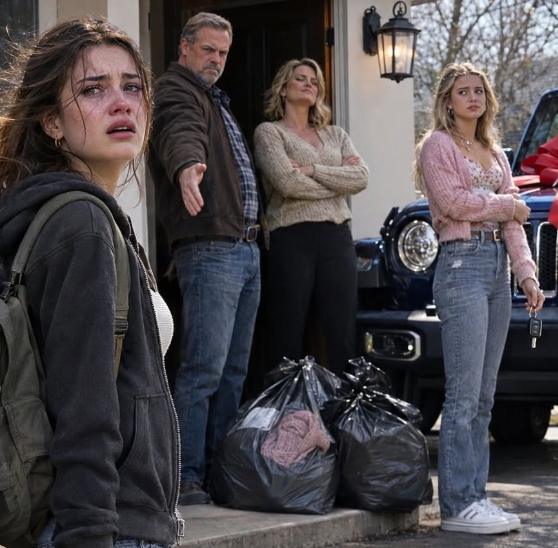
Chapter 18
Nobody pretended that a printed email or a disputed form automatically proved a crime.
But Dad could no longer claim he owned the house, and he could no longer persuade the bank to release a loan using rights he didn't have.
He made one final proposal: he'd repay my savings if I signed documents allowing the house to secure a new loan.
Nolan didn't even need to answer for me.
"No," I said.
Dad stared at me.
"It's one signature, Lena."
"One signature is why we're here."
Eventually, after further negotiation between the lawyers, a written civil agreement was reached.
Colin agreed to repay the $11,860 from proceeds of selling equipment and a vehicle he owned personally, while reserving the right to contest any unrelated allegations through the proper process.
He and Marissa also agreed to leave the house by a specified date after the trustee completed its notices and the required property-transfer steps.
The agreement did not erase the bank's records, decide criminal responsibility, or absolve anyone of later findings.
It did give me a documented way to recover my money and secure possession of the house without pretending justice happened in an afternoon.
Dad was the last person to stand when the meeting ended.
"You really want us on the street?" he asked.
For nine nights, I'd slept in a car he knew barely ran, while he sent me messages about paperwork.
I thought of telling him how freezing the steering wheel had felt in my hands at dawn.
Instead, I said, "You have time to find somewhere else, and money to arrange it. That's more than you gave me."
He looked away.
Marissa rose and carried her purse toward the door without speaking.
Before Dad followed, he set a small cedar box on the table.
It had a scratched brass clasp and a faded blue ribbon tied around the handle.
"Your mother would've hated this," he muttered.
I pulled the box toward me.
"She would've hated what started it."
Inside were photographs, a little silver necklace, and a folded note in my mother's handwriting.
Across the back of a picture of the two of us in the greenhouse, she'd written, For Lena, when you're old enough to understand how much you were loved.
I held the photograph until everyone else had gone.
Then I cried, not because I'd lost the argument, but because I was finally allowed to stop having it.