
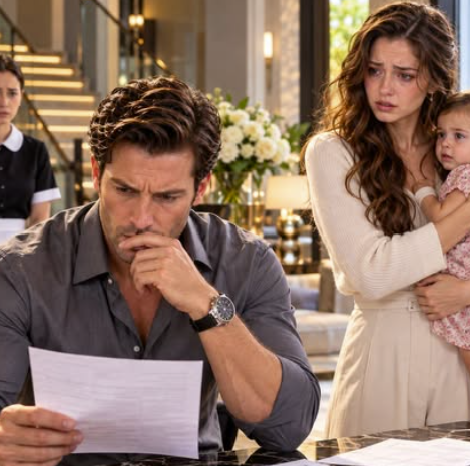
Chapter 12
Grant,
Your father believes the past can be arranged into a shape that makes him comfortable. He has spent years calling our marriage complicated when the truth is that he made choices and expected everyone else to live with them.
I looked toward the shelves.
My father had always been generous in public. He paid hospital bills for employees. He sponsored scholarships. He remembered birthdays. People described him as principled.
My mother had once called him a man who knew how to look honorable.
The letter continued.
I did not tell you everything because I wanted you to have a childhood free from adult grievances. Perhaps that was a mistake. Silence can protect a child, but it can also leave him vulnerable to repeating what no one explained.
I stopped reading.
The phrase seemed written directly for me.
At the bottom of the first page, she had listed the name of an attorney in Asheville.
Eleanor Voss.
I knew the name.
Eleanor had represented my mother during the final years of her separation from my father. She had also attended my mother’s funeral, though I had assumed she was there as a friend.
I turned the page.
Your father used money from the family holdings to support a second life. When I confronted him, he said the money was his because he had built the business. But some of those properties came from my family. My parents placed them in his care when we married because they believed we were building something together.
I read faster.
He told me I had no claim because the records had been changed. I signed papers I did not fully understand because he said they were necessary to protect you. He promised that whatever happened between us, you would be secure.
My hands began to shake.
The trust agreement on my desk had not been an inheritance in the ordinary sense. It had been assembled from property my mother’s family had contributed, then placed under my father’s control.
I reached for the next page.
I later learned that one of the signatures used to transfer the holdings was not mine.
The room seemed to tilt.
A sound escaped me before I realized I had spoken.
“No.”
The letter went on.
I discovered this after your father died? No. I discovered it while you were still a child. I did not challenge him because he threatened to make the dispute public and told me you would be dragged into it. I believed him when he said he would protect you. I was wrong.