
Chapter 7
Enlisted sailors walked past the scullery door carrying trays, laughing about weekend plans and training schedules. Some looked through the wire-reinforced glass, pointing at the new face scrubbing sludge from the floor.
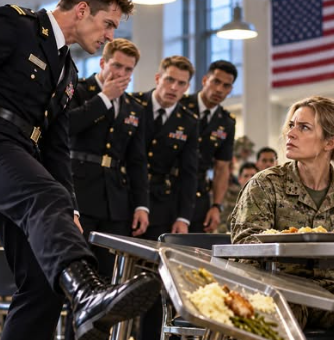
At noon, Marcus Reed entered the cafeteria line with Mason Grant. Ethan watched them through the steam vents, his heart pounding with shame as he crouched beside a five-gallon grease bucket.
Marcus looked directly into the wash station, his eyes widening as he recognized Ethan’s posture and shaved head. Marcus immediately turned away, steering Mason toward the far seating area without acknowledging him.
Ethan felt a strange, cold clarity settle into his chest. Yesterday, Marcus had laughed at his jokes and cheered his aggression; today, Marcus treated him like an infectious disease to avoid.
The realization pierced deeper than any reprimand Mercer had delivered. The loyalty he thought he commanded was hollow, bought with fear and rank rather than respect or genuine brotherhood in arms.
That afternoon, Senior Chief Hale entered the scullery carrying a clipboard. He stopped beside the dish line, inspecting the stacks of clean plates Ethan had unloaded from the steaming conveyor racks.
"You missed grease on these edges," Hale remarked, pointing at three white porcelain bowls. He did not raise his voice; he merely stated a fact with cold, mechanical detachment that offered no debate.
Ethan swallowed his exhaustion, picked up the bowls, and reloaded them onto the washing rack. "I’ll run them through again, Senior Chief," he said, wiping sweat from his forehead with his forearm.
"Standards don't drop because you're tired, Cole," Hale said, turning away. "A dirty bowl breeds dysentery in the field just as fast as a jammed rifle loses a firefight. Remember that."
For three weeks, the routine never changed. Ethan awoke at 0400, scrubbed ovens until breakfast service, hauled fifty-pound bags of onions through rear docks, and swept the floor until his knees bled.
His tactical boots sat in his locker, replaced by steel-toed rubber boots that smelled permanently of soap and floor wax. His hands grew rough, skin splitting around cuticles from harsh cleaning chemicals.
Yet as the days bled into weeks, the burning resentment inside him began to alter. The frantic desire to defend his dignity was replaced by exhaustion, and exhaustion slowly gave way to observation.
Chapter 5
He watched the galley workers—civilian women in hairnets, young seamen straight from boot camp, middle-aged supply clerks—who arrived before dawn and left after dusk without fanfare, medals, or public recognition.