
Chapter 22
Nell grabbed his finger.
He let her.
“I thought there might be.”
“I know.”
“Are you asking for a divorce?”
“I think I am.”
The room became painfully quiet.
Outside, somewhere in the courtyard, a child rode a scooter across concrete.
Adam stared at his daughter’s hand wrapped around his finger.
Then he nodded.
“If that’s what you want.”
Marina cried.
That surprised him.
He had imagined that if this moment came, she would be calm.
Certain.
Distant.
Instead, tears spilled down her face.
“I didn’t want this.”
Adam’s composure broke.
“I know.”
“I wanted you.”
He covered his mouth briefly.
“I know.”
“I wanted the life we planned.”
“I know.”
“I wanted you to come home.”
Adam bowed his head.
“I should have.”
Marina wiped her face.
“But eventually I had to stop building my safety around whether you would.”
Adam looked at her.
And that was the sentence that ended his last private argument against reality.
Not Savannah.
Not the affair.
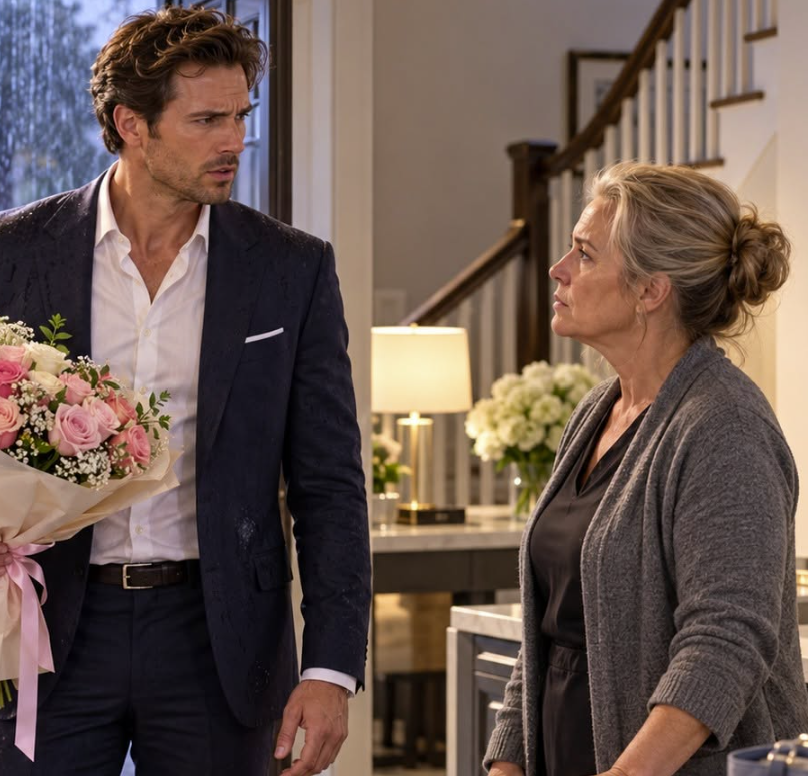
Not the roses.
Not even the twenty-day trip.
Marina had needed him until needing him became dangerous to her peace.
So she had learned not to.
He could regret that.
He could change because of it.
He could become a devoted father.
He could spend the rest of his life wishing he had understood sooner.
But he could not demand that Marina become dependent on him again just so his transformation would have somewhere comfortable to land.
He reached for a tissue box and handed it to her.
“I’m sorry,” he said.
Marina nodded.
“I believe you.”
That should have felt like victory.
Instead, Adam understood the difference between forgiveness and restoration.
She could believe his apology.
And still leave.
---
# CONCLUSION — The Roses Died, but Marina’s Life Kept Opening
The divorce was quiet.
There were attorneys because practical things required attorneys, but no one marched into a courtroom with a dramatic folder.
They agreed on temporary parenting arrangements, then permanent ones.
Adam kept the house.
Marina kept her apartment for another year before eventually moving into a small three-bedroom place ten minutes away.
They divided furniture.
They closed joint accounts.
They argued twice about holidays and once about a dining table.
Then they apologized and tried again.
The ordinary nature of the ending surprised Adam.
He had imagined divorce as an explosion.
Mostly, it was paperwork and calendars.
Mostly, it was learning that consequences were often repetitive rather than cinematic.